How to size a home battery backup system
Most homes need 10-30 kWh of usable battery storage. To size yours: add up the daily kWh of the loads you want to back up, multiply by the number of days of autonomy you want, and add ~20% headroom. Essentials-only backup often fits in 16 kWh; whole-home or off-grid use typically needs 28 kWh or more.
Step 1 — Decide what you're backing up
Battery sizing starts with a decision, not a number: are you backing up only essential loads (refrigerator, lights, internet, phones, a well or sump pump) or the whole home including HVAC, electric water heating, and an EV charger?
Essentials-only backup keeps the lights on through an outage for far less storage. Whole-home backup and off-grid living need substantially more, because they include large, continuous loads like air conditioning and electric heat.
Step 2 — Estimate your daily energy use
A typical US home uses about 20-30 kWh per day. Your last 12 utility bills show your real average — divide monthly kWh by 30. For just the essentials, a fridge (~1-2 kWh/day), lights and electronics (~1-3 kWh/day), and a well pump (~1-2 kWh/day) usually total 4-8 kWh per day.
If you're sizing for off-grid, use your highest-use month, not the average, so you don't come up short in winter or peak summer.
Step 3 — Choose your days of autonomy
Days of autonomy is how long the battery should carry your loads without recharging. For grid-tied backup against typical outages, 1 day is usually enough because solar or the grid recharges quickly. For off-grid, plan 2-3 days to ride through cloudy stretches.
Usable storage needed ≈ daily kWh × days of autonomy ÷ depth of discharge. LiFePO4 systems safely use ~90-100% of rated capacity, so the math stays simple.
Step 4 — Match to a system
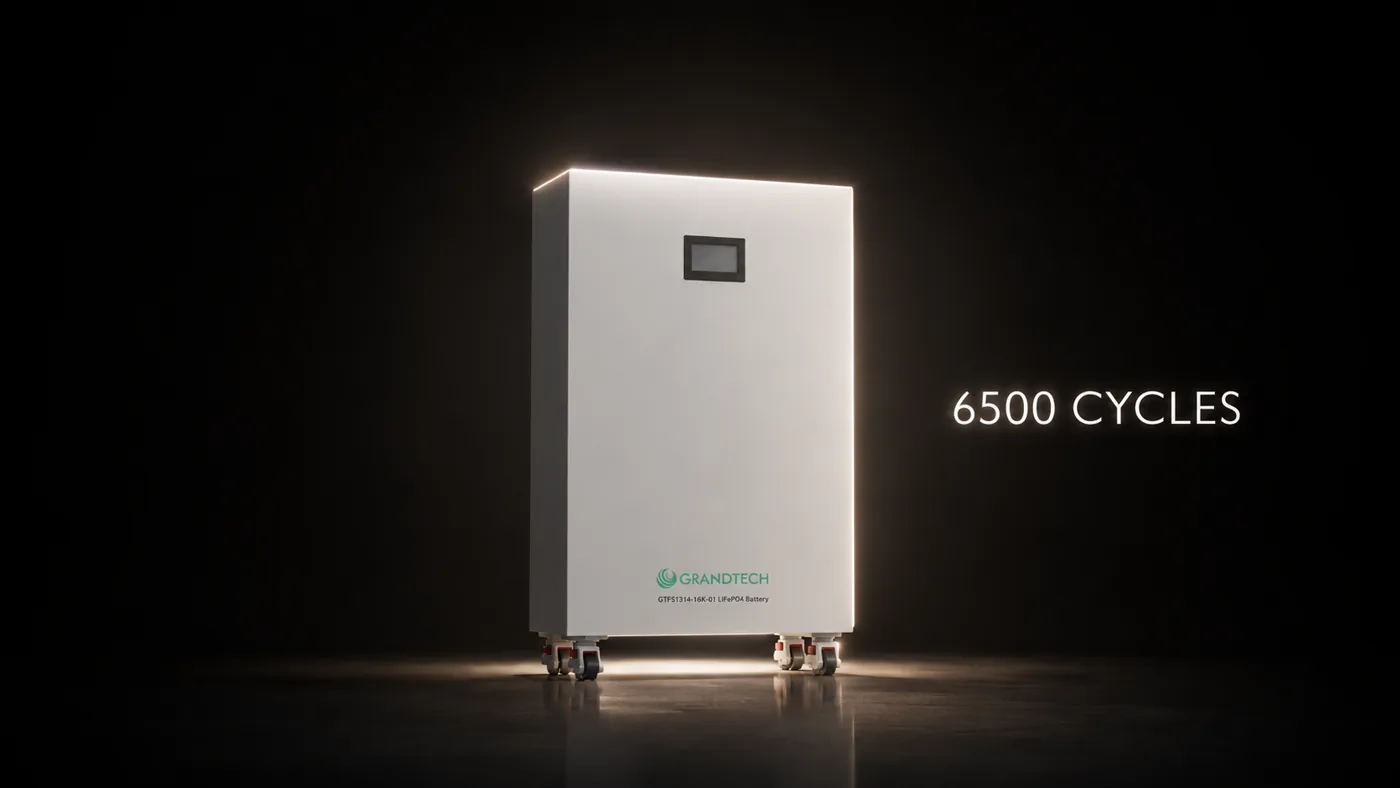
A single 16 kWh LiFePO4 battery comfortably covers essentials-only backup for a day or more. Whole-home backup that includes HVAC, or any off-grid setup, generally calls for 28 kWh or more — often built by stacking modules in parallel.
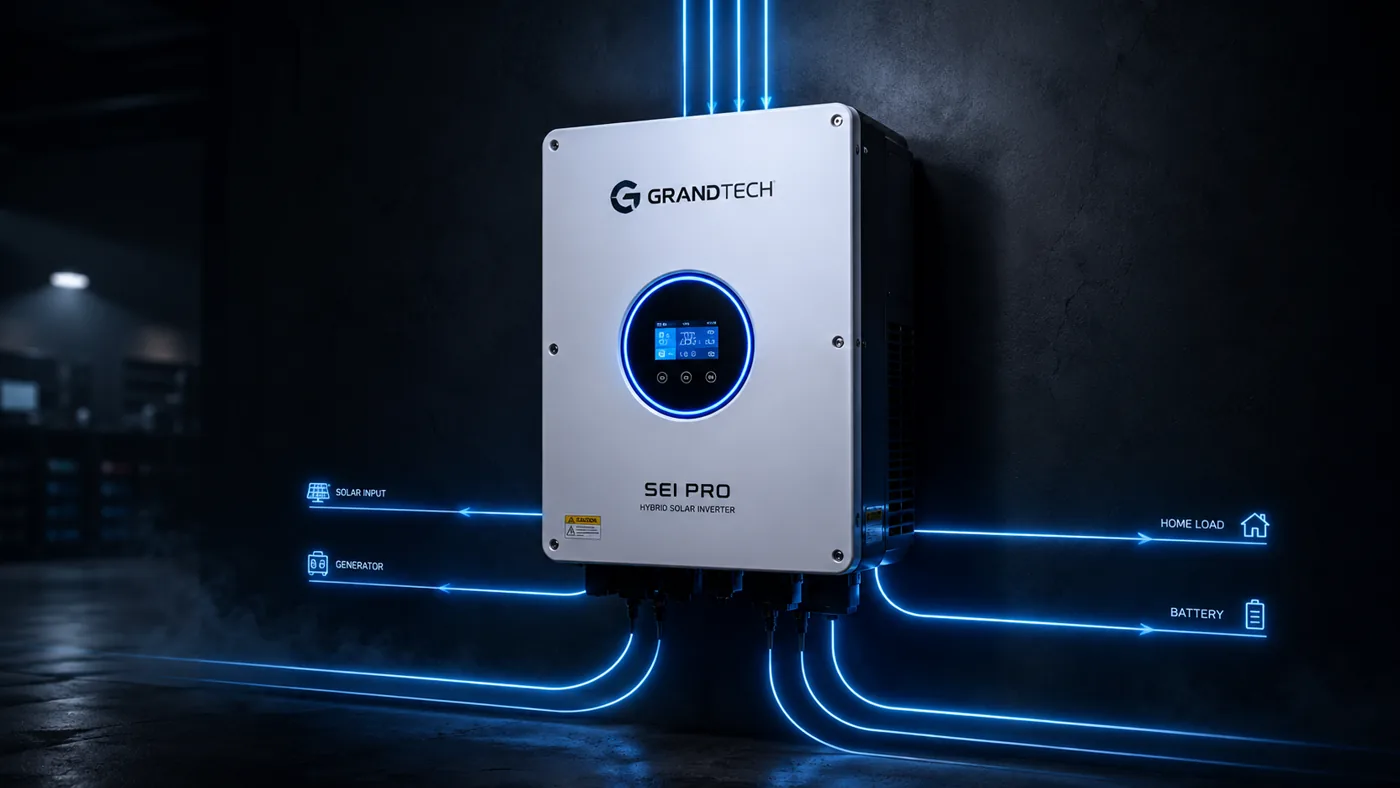
Pair the battery with a hybrid inverter sized to your peak load (the most power your home draws at once), not just your energy use. A 10-12 kW split-phase hybrid inverter handles most homes, including a central AC start-up surge.
Frequently asked questions
How many batteries do I need to run a house for 24 hours?
If your essential loads use 6-8 kWh per day, a single 16 kWh LiFePO4 battery runs them for well over 24 hours. To back up the whole home including HVAC for a full day, plan for 28 kWh or more of usable storage.
Can I add more battery capacity later?
Yes. Modular LiFePO4 systems are designed to stack in parallel, so you can start with one module and add capacity as your needs grow, as long as your inverter and busbar support the additional batteries.
Does battery size depend on my inverter?
They're sized for different things. Battery capacity (kWh) determines how long you can run; inverter power (kW) determines how much you can run at once. Size the battery to your daily energy use and the inverter to your peak simultaneous load.